Most Houston water damage jobs land between $1,067 and $5,169, averaging $3,074. What moves a job inside that range is not the size of the room, it is the category of the water and how long it sat.
| Job | Typical Houston range |
|---|---|
| Typical restoration job, whole claim | $1,067 to $5,169 (average $3,074) |
| Clean water (Category 1), drying without demolition | $3.75 to $7 per sq ft |
| Gray water (Category 2), partial drywall and flooring removal | $7 to $12 per sq ft |
| Black water (Category 3), full demolition and structural drying | $12 to $25+ per sq ft |
Source: Angi's Houston dataset and published rates from local operator 24/7 Restoration Specialists, compiled August 2026. A range is not a quote.
Category is set by the IICRC S500 standard. Clean water from a supply line is Category 1. Water that has passed through an appliance or a dishwasher is Category 2. Anything involving sewage or floodwater from outside is Category 3, and in that case contaminated porous materials are removed rather than cleaned, which is why the per-square-foot figure roughly triples.
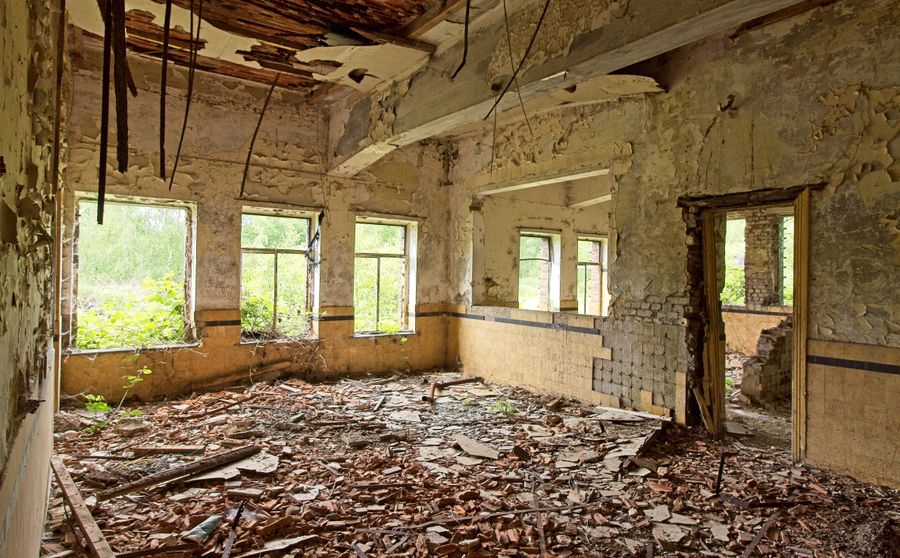
Harris County is not a place where flooding is an unusual event. About 136,000 structures flooded during Hurricane Harvey in 2017, and 68% of them sat outside the mapped 100-year floodplain. First Street's current model puts 57.6% of Harris County properties at some flood risk over the next 30 years.
The practical consequence for a homeowner is that being outside a flood zone is not evidence you are safe, and it is not evidence your policy covers you. Standard homeowners cover excludes rising water. Flooding needs separate NFIP or private flood cover, and that distinction decides who pays long before anyone argues about the invoice.
Mold can begin on a wet material within 24 to 48 hours. That is the reason extraction is treated as an emergency and drying is not left until the adjuster has visited.
Texas regulates what happens next. Under the Texas Department of Licensing and Regulation's mold rules, growth covering 25 contiguous square feet or more must be remediated by a licensed Mold Remediation Contractor, working to a protocol written by a separately licensed Mold Assessment Consultant. The two roles cannot be the same firm on the same job, and TDLR must be notified at least 5 days before licensed work starts.
You may remediate your own single-family home without a licence. You may not hire an unlicensed contractor to do it for you.
Drying is finished when a moisture meter says the materials have returned to normal, not when the floor feels dry underfoot. Every job carries the same record, because it is what an insurer asks for:
Braeswood. Braeswood backs onto Brays Bayou, and bayou-adjacent property in Houston floods from the channel rather than from the street. Homes here are frequently in mapped flood zones, so the insurance question is usually settled before the loss rather than after it.
Meyerland. Meyerland flooded repeatedly through the 2015 Memorial Day storm, the 2016 Tax Day storm and Harvey, and the neighborhood has one of the highest concentrations of elevated and rebuilt homes in Houston. That history matters for a claim: repetitive-loss properties are treated differently, and prior remediation work should be documented before new work starts.
The Heights. The Heights sits higher than most of Houston, which is where the name comes from, but the housing stock is old and much of it is pier-and-beam. That changes the drying problem: water under a raised floor is harder to detect and slower to dry than water on a slab, and crawl-space moisture is where mold takes hold unnoticed.
Katy. Katy sits near the Addicks and Barker reservoirs, and the controlled releases during Harvey put water into homes that had never flooded from rainfall alone. Reservoir-related flooding has its own claim history in this area, and documentation from the first hour is worth more here than almost anywhere in the metro.
Pearland. Pearland straddles the Brazoria and Harris county line, and which side a property sits on decides which permit office handles the repair. Newer subdivisions here are on slab with minimal elevation difference across a street, so flooding tends to affect whole blocks rather than individual houses.
Sugar Land. Sugar Land is in Fort Bend County, not Harris, which means a different permit office and a different floodplain administrator for structural repairs. If a crew quotes you a Houston permitting timeline for a Sugar Land address, they have not checked.
Calls are dispatched 24/7 and extraction usually starts the same day. Getting standing water out early is what keeps a dry-out from turning into a rebuild, because the cost curve here is driven by time, not by area.
Between $1,067 and $5,169 for a typical job, averaging $3,074, according to Angi's Houston dataset. By area it runs $3.75 to $7 per square foot for clean water dried without demolition, and $12 to $25 or more per square foot for Category 3 work where contaminated material has to come out.
Sudden and accidental damage, such as a burst supply line, is usually covered. Gradual leaks generally are not, and rising water from outside is excluded from standard policies entirely. Given that 68% of the Harris County homes flooded by Harvey were outside the mapped floodplain, it is worth checking whether you carry separate flood cover rather than assuming.
Once growth reaches 25 contiguous square feet, yes. TDLR requires a licensed Mold Remediation Contractor working to a licensed Mold Assessment Consultant's protocol, and the assessor cannot be the same firm as the remediator. Below that threshold the work is unlicensed, so ask what the measured area actually is.
Three to five days is typical for a contained clean-water loss with equipment monitored daily. It ends on a moisture reading rather than a fixed schedule, and a crew that promises a date before measuring is guessing.
Emergency Response
Call and a crew is dispatched - extraction the same day, drying equipment set the same visit, and the documentation your claim needs from the first hour.